Maya Torres
7 min read · February 27, 2026
Why Moon Rituals Work
A ritual is structured attention. That is it. No incense required, no crystals, no special language. When you sit down at the New Moon and write what you want to build, or stand under the Full Moon and name what you are ready to release, you are doing something psychologically powerful: you are aligning your conscious intention with a natural rhythm larger than yourself.
The lunar cycle provides a built-in schedule for this practice. Every 29.5 days, the Moon completes a full orbit — from invisible (New Moon) to fully illuminated (Full Moon) and back. Astrologers have tracked this rhythm for millennia, and the framework they developed is straightforward: New Moons are for beginning. Full Moons are for completing. The waxing phase between them builds momentum. The waning phase releases it.[1]
For the astronomical and astrological foundations of the lunar cycle, see our guide on New Moon vs Full Moon in astrology. This article is purely practical — what to do, when to do it, and how to match your ritual to the element of each lunation.
New Moon Rituals: Planting Seeds
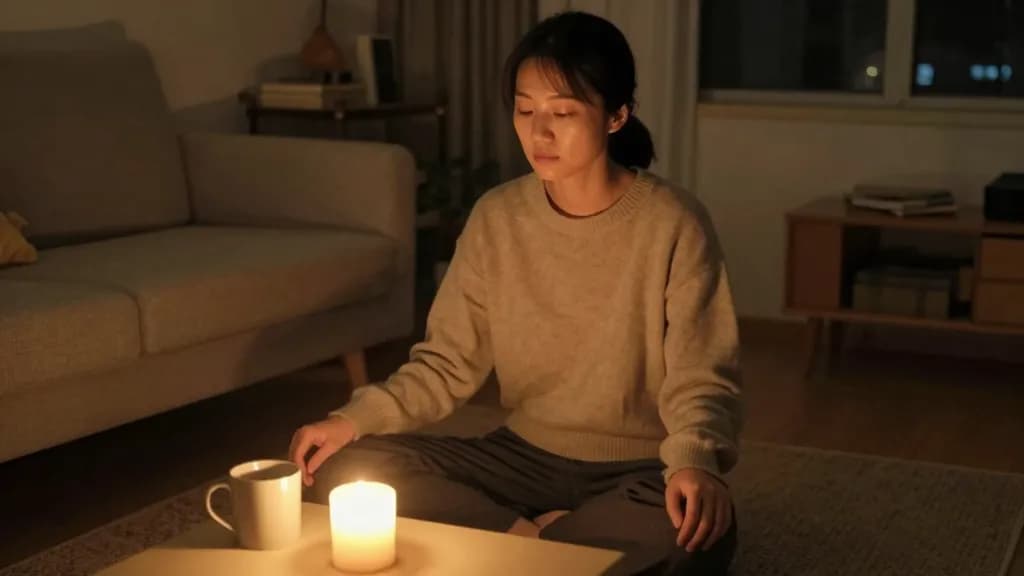
The New Moon is the dark phase — the Moon is invisible, aligned with the Sun. Energy is low, internal, and fertile. This is the time for setting intentions, not for taking big action. Think of it as writing the blueprint, not breaking ground.
Basic New Moon Ritual (15 minutes)
- Create quiet. Turn off your phone. Close the door. Sit somewhere you will not be interrupted. The environment does not need to be elaborate — it needs to be undisturbed.
- Check the sign. The New Moon's zodiac sign colors your intention. An Aries New Moon favors bold personal goals. A Capricorn New Moon favors career and structural ambitions. A Pisces New Moon favors creative and spiritual intentions. Let the sign guide your focus rather than forcing it.
- Write 3–5 intentions. Be specific enough to be meaningful but flexible enough to allow unexpected paths. "I intend to find a job that challenges me" is better than "I intend to get the marketing director position at Company X." The universe has better options than your current imagination sometimes.
- Read them aloud. Speaking your intentions activates them differently than thinking them. You hear them. You feel whether they ring true or hollow. Edit anything that sounds wrong when said aloud.
- Store the list. Put it somewhere you can revisit at the Full Moon two weeks later. A journal, an envelope, a notes app — the container does not matter. Revisiting matters.
The simplicity is the point. Elaborate rituals can become performance rather than practice. Start bare. Add elements only if they deepen your focus.[2]
Full Moon Rituals: Releasing What Is Done
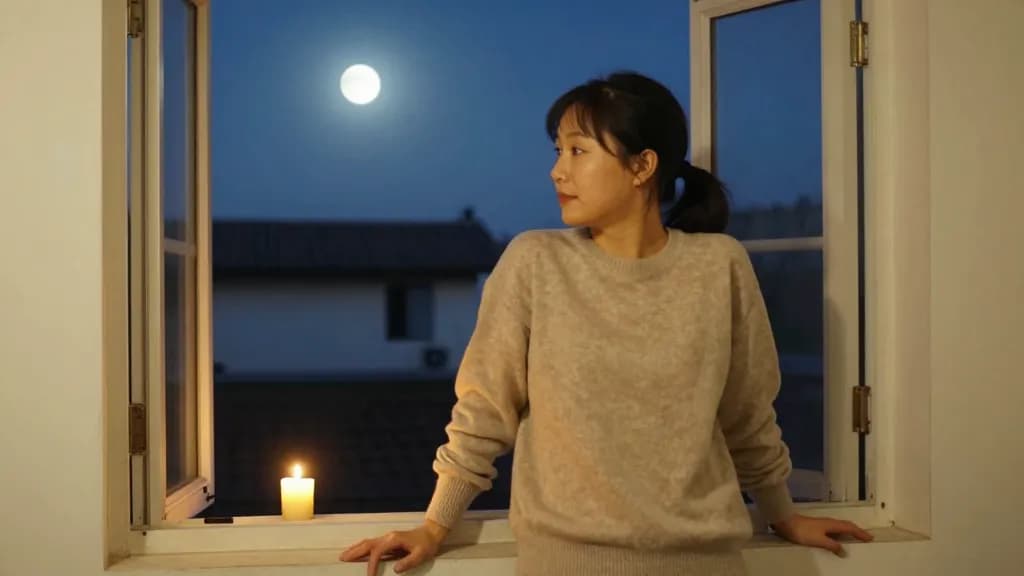
The Full Moon is peak illumination — everything is visible, emotions run high, and whatever has been building since the New Moon reaches its crescendo. Full Moon rituals focus on release: completing what is finished, letting go of what no longer serves, and clearing space for the next cycle.
Basic Full Moon Ritual (15–20 minutes)
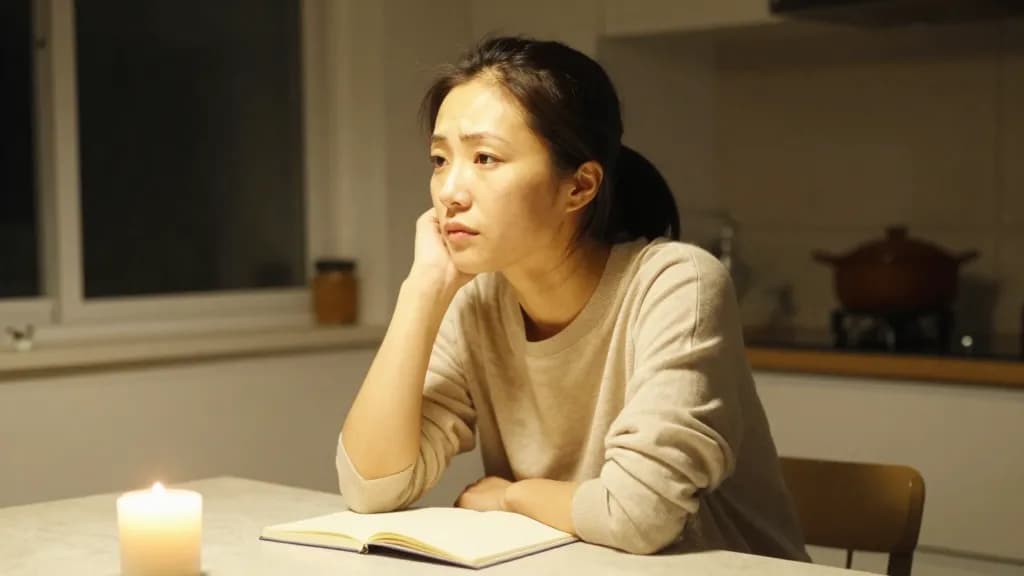
- Review your New Moon intentions. Pull out the list you wrote two weeks ago. What has progressed? What has stalled? What has shifted in ways you did not expect? The Full Moon is a natural checkpoint.
- Identify what to release. This can be a habit, a belief, a grudge, a commitment that has run its course, or a pattern you recognize as outdated. Be honest. Release is not about drama — it is about accuracy. What is actually done?
- Write a release list. Name specifically what you are letting go. "I release the belief that I need to be perfect to be valued." "I release the habit of checking my phone before getting out of bed." "I release the guilt about leaving that job."
- Destroy the list symbolically. Burn it safely in a fireproof dish. Tear it into small pieces and throw them away. Dissolve it in water. The physical act of destruction signals completion to your subconscious in a way that simply deciding to let go does not.
- Sit with the empty space. After release, resist the urge to immediately fill the gap. Let the waning Moon phase — the two weeks between Full Moon and the next New Moon — be a fallow period. Rest. Process. Observe what wants to emerge naturally.
Full Moon energy is intense. If emotions surface during the ritual — frustration, grief, relief — let them. The point is to feel what has been stored, not to maintain composure.[1]
Rituals by Element
Each New Moon and Full Moon falls in a zodiac sign belonging to one of four elements. Matching your ritual style to the element creates resonance — the form of the practice echoes the energy it is working with.
Fire Signs (Aries, Leo, Sagittarius)
Fire lunations carry urgency, courage, and creative spark. Rituals should be active and physical.
- New Moon: Write intentions on paper, then light a candle and read them by firelight. Move your body — dance, stretch, take a brisk walk — before or after writing. Fire needs motion.
- Full Moon: Burn your release list. If safe outdoor space is available, build a small fire and feed it what you are letting go. Physical exertion also works: run, box, or practice vigorous yoga as a form of energetic release.
Earth Signs (Taurus, Virgo, Capricorn)
Earth lunations are grounded, sensory, and practical. Rituals should engage the body and the material world.
- New Moon: Write intentions while seated on the ground — a garden, a park, a balcony. Hold a stone or piece of wood while you write. Plant a literal seed or repot a plant as a physical anchor for your intention.
- Full Moon: Declutter a physical space as your release ritual. Clean out a drawer, donate clothes, reorganize a shelf. Earth signs release through tangible action, not abstract declaration.
Air Signs (Gemini, Libra, Aquarius)
Air lunations are cerebral, social, and communicative. Rituals should involve words, ideas, and connection.
- New Moon: Speak your intentions aloud to someone you trust — a friend, a partner, a therapist. Or record a voice memo to yourself. Air energy activates through language and exchange, not solitary writing alone.
- Full Moon: Write a letter to the thing you are releasing — the relationship, the habit, the belief — as if it were a person. Thank it for what it taught you. Then close the letter and put it away or destroy it.
Water Signs (Cancer, Scorpio, Pisces)
Water lunations are emotional, intuitive, and deeply internal. Rituals should create space for feeling.
- New Moon: Take a bath or shower before writing intentions. Water signs respond to literal water as a ritual container. Write intentions while still in that soft, open state. Let them be emotional rather than strategic.
- Full Moon: Cry if you need to. Water sign Full Moons often trigger emotional release that feels disproportionate to the situation — it is not. The tears are processing something older and deeper. Let the release be messy.
Timing and Practical Notes
Precision matters less than consistency. But a few timing guidelines help:
- New Moon window: The ideal time for intention-setting is within 24 hours after the exact New Moon. Avoid the 12 hours before — this is the balsamic phase, still suited for release rather than initiation.
- Full Moon window: Release rituals work best within 24 hours of the exact Full Moon in either direction. The energy is palpable — you will likely feel it without checking the calendar.
- Void-of-course Moon: Some practitioners avoid setting intentions when the Moon is void of course (making no major aspects before changing sign). This adds complexity. If you are a beginner, ignore it. Consistent practice outweighs precise timing.
- Eclipse exceptions: During eclipse seasons, traditional moon rituals do not apply. Eclipses are too volatile for intention-setting. Observe and receive instead of directing energy.
The most important timing rule: do it regularly. A simple ritual done monthly builds more momentum than an elaborate ritual done once. The Moon will be back in two weeks. You can always refine your practice next cycle.[2]
Building a Sustainable Practice
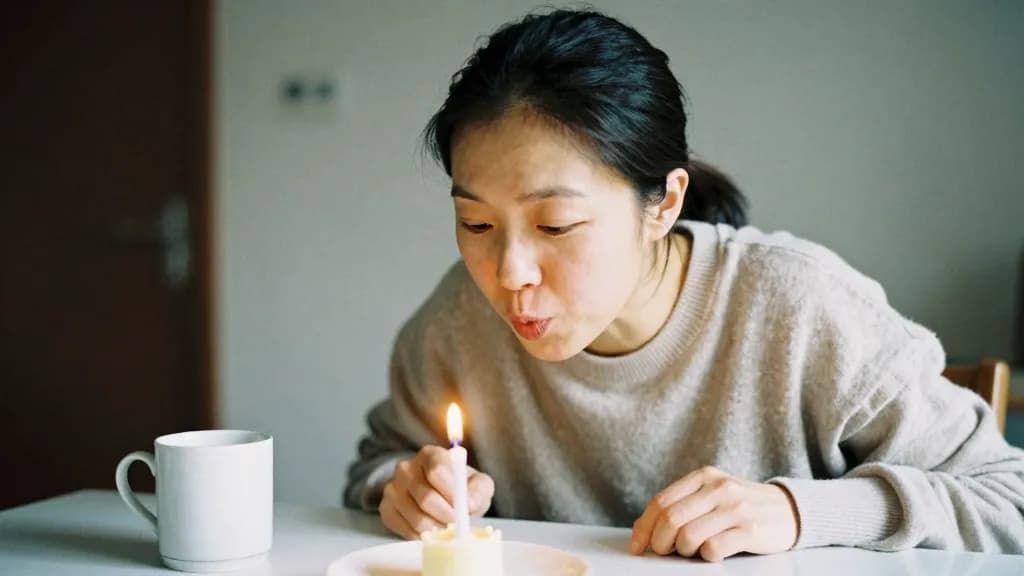
Moon rituals lose their power when they become obligations. The moment you dread the New Moon because you "have to" write intentions, the practice has stopped serving you. Keep it voluntary. Keep it flexible. Skip a month if life is too full. The Moon does not care about your attendance record.
Over time, patterns emerge. You will notice which intentions manifest easily and which resist. You will discover what you actually struggle to release — which is far more revealing than what you think you should release. You will develop your own rhythm within the rhythm, adapting the basic framework to fit your temperament, your schedule, and your evolving relationship with the practice.
After several months, review your journal entries. The trajectory of your intentions tells a story you cannot see in real time. Goals shift. Priorities clarify. Things you thought were essential drop away. Things you never imagined wanting become central. This long-view perspective is the real gift of cyclical practice — not any single ritual but the accumulated record of your own evolution.
Start with the next New Moon. Write three things you want to build. Revisit them at the Full Moon. That is the entire practice. Everything else is elaboration.
To understand how each lunation activates different areas of your chart, generate your Western chart or explore your Vedic chart and identify which houses the current Moon cycle is transiting.
Discover Your Birth Chart
Take our guided quiz to generate your personalized birth chart with detailed analysis, timing insights, and more.
Keep reading
- New Moon vs Full Moon in AstrologyThe monthly lunar cycle — from New Moon to Full Moon and back — provides astrology's fastest natural timing rhythm. New Moons initiate. Full Moons culminate. This guide explains how to work with both.
- Dress for Your Big Three: Sun, Moon, and Rising Sign Style GuideYour Big Three — Sun, Moon, and rising — do not just describe your personality. They describe your wardrobe. The Sun governs your core style identity. The Moon governs what you reach for when no one is watching. The rising sign governs what you wear when everyone is. Together, they explain why your closet contains contradictions that actually make perfect sense.
- Sun Sign vs Moon Sign vs Rising Sign: What Each One MeansYour Sun sign is your identity. Your Moon sign is your emotional core. Your rising sign is your outward presentation. Together, these three placements — the Big Three — capture more about you than any single sign ever could.
- How to Read Sun, Moon, and Rising TogetherYour Sun, Moon, and rising signs form a triangle of identity, emotion, and presentation. Reading them together — as a system, not a list — reveals the internal dynamics that define your personality.
References
- [1] Dane Rudhyar. The Lunation Cycle, Aurora Press (1967).
- [2] Ezzie Spencer. Lunar Abundance: Cultivating Joy, Peace, and Purpose Using the Phases of the Moon, Running Press (2018).
- [3] April Elliott Kent. The Book of the Moon: Discovering Astrology's Lost Dimension, Hay House (2020).
About Maya Torres
Astrology & Lifestyle Writer
Certified Professional Astrologer (Atlas Astrology Board), Cultural Trend Writer
Maya Torres is a certified astrologer and cultural trend writer who connects astrological insight with modern life — relationships, wellness, identity, and self-expression. She holds professional certification from the Atlas Astrology Board and writes about how celestial patterns intersect with contemporary culture, from dating dynamics to burnout recovery to personal style.
Reviewed by Editorial Board, Astrology-Numerology Research Team