
Daniel Reeves
6 min read · November 14, 2025 · Updated January 5, 2026
Every Address Has a Frequency
You choose a home for its square footage, its neighborhood, its price. You rarely choose it for its number. Yet in numerological practice, the number on your door shapes the energy inside your walls. Not metaphorically. Practitioners argue the effect is as tangible as light quality or ceiling height — subtle, constant, and cumulative.[1]
House number numerology reduces your full street address to a single digit between 1 and 9. That digit describes a dominant vibration: the kind of activities the space supports, the emotional tone it cultivates, and the challenges it quietly amplifies. A 5 house buzzes with social energy. A 7 house enforces solitude. Neither is superior. Both are specific.
The concept sits at the intersection of environmental psychology and symbolic mathematics. You don't need to believe numbers are magical to notice that certain homes feel restless while others feel still. House number numerology offers a framework for understanding — and working with — that difference. If the concept of numerological vibration is new to you, our beginner's guide to numerology lays the groundwork.
How to Calculate Your House Number
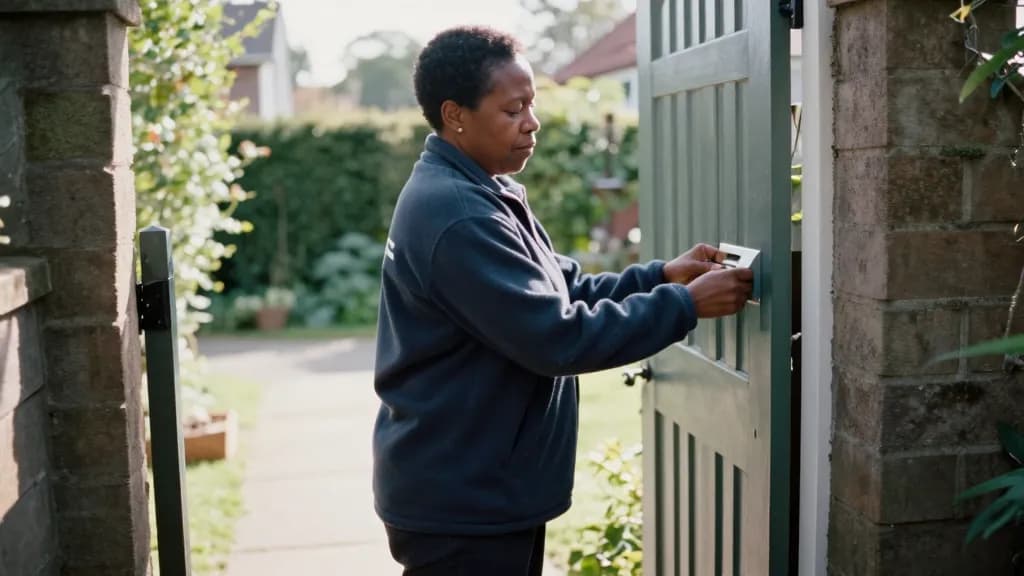
The process is straightforward. Take the numeric portion of your street address and reduce it to a single digit.
Standard House Numbers
If you live at 742 Oak Street, your calculation is: 7 + 4 + 2 = 13 → 1 + 3 = 4. You live in a 4 house.
If your address is 8 Maple Avenue: the number is already single-digit. You live in an 8 house.
Apartment Numbers
Apartment dwellers calculate two numbers. The building number describes the shared energy of the entire structure — the hallways, the lobby, the collective atmosphere. Your unit number describes the specific vibration of your private space. Unit 14B in building 230 gives you a building number of 5 (2+3+0) and a unit number of 5 (1+4 = 5, the B is ignored in most systems). Both numbers matter. If they match, the energy is concentrated. If they differ, you experience a blend.[2]
Letters in Addresses
Some addresses include letters: 42A, Suite 3C, Unit 7-B. The standard Pythagorean system assigns numeric values to letters (A=1, B=2, C=3... I=9, J=1, K=2, and so on). So 42A becomes 4 + 2 + 1 = 7. Suite 3C becomes 3 + 3 = 6. For a complete explanation of the Pythagorean letter-to-number mapping, see our guide on how numerology works.
For a step-by-step walkthrough with additional examples and edge cases, our dedicated house number calculation guide covers every scenario — including multi-unit buildings, rural routes, and PO boxes.
House Numbers 1 Through 5: Meanings and Energy
1 House — Independence and Ambition
The 1 house breeds self-reliance. It favors individuals and sole proprietors over large families. Creative projects thrive here. So does entrepreneurship. The energy is forward-moving, sometimes aggressively so. Conflict can surface when multiple strong personalities share the space — the 1 vibration doesn't naturally accommodate compromise. Singles flourish. Couples succeed if both maintain distinct identities.
Best for: entrepreneurs, artists, anyone starting fresh.
Challenge: loneliness, selfishness, inability to relax.
2 House — Partnership and Sensitivity
The 2 house is the natural habitat of couples, close friends, and quiet contemplation. Diplomacy permeates the walls. Arguments feel louder here — not because they're worse, but because the 2 vibration amplifies emotional sensitivity. Decor tends toward soft textures and muted tones. The space resists harshness. It also resists solitary ambition. Working alone in a 2 house can feel isolating rather than productive.[3]
Best for: couples, mediators, therapists, musicians.
Challenge: over-dependence, passive-aggression, difficulty with boundaries.
3 House — Creativity and Social Energy
Walk into a 3 house and you feel lighter. The vibration is expansive, cheerful, and socially magnetic. Dinner parties materialize without planning. Art accumulates on every surface. Children thrive. Pets multiply. The challenge: discipline evaporates. Bills go unpaid. Diets collapse. The 3 house is brilliant for generating ideas and terrible for executing them. Pair it with a disciplined personal year, or the joy drifts into scattered indulgence.
Best for: writers, entertainers, families with young children.
Challenge: financial disorder, superficiality, noise.
4 House — Stability and Structure
The 4 house is a fortress. Solid, reliable, grounding. It supports long-term projects, financial discipline, and the slow accumulation of wealth. Renovations in a 4 house tend to be structural rather than cosmetic — the energy values substance over style. Families put down roots here. Businesses run from a 4 house develop staying power. The downside: rigidity. Change feels harder than it should. Spontaneity is the 4 house's weakest quality.
Best for: families, accountants, builders, anyone establishing roots.
Challenge: stubbornness, workaholism, resistance to change.
5 House — Change and Freedom
The 5 house is a revolving door. People come and go. Furniture rearranges itself monthly. The energy craves variety, stimulation, and movement. It's the ideal short-term rental, the perfect party house, and the worst place to attempt a quiet monastic life. Long-term residents in a 5 house often travel extensively or cycle through intense phases of reinvention. Boredom is the enemy. If the energy stagnates, the house creates disruption to break the pattern — appliances break, roommates leave, unexpected guests arrive.[1]
Best for: travelers, young professionals, those in transition.
Challenge: instability, excess, difficulty committing.
House Numbers 6 Through 9: Meanings and Energy
6 House — Nurturing and Responsibility
The 6 house is the archetype of home. Warm, beautiful, and demanding. It draws people in and asks them to take care — of children, of aging parents, of the garden, of each other. The aesthetic impulse is strong. Six houses tend to be well-decorated, sometimes obsessively so. Cooking is significant. The kitchen becomes the gravitational center. The danger: martyrdom. The 6 vibration can transform care into obligation and hospitality into codependence. Boundaries require constant reinforcement.
Best for: families, healers, interior designers, therapists.
Challenge: over-giving, perfectionism, smothering.
7 House — Solitude and Inner Work
The 7 house is a sanctuary. It repels noise, crowds, and superficiality. Residents feel drawn to reading, meditation, study, and long silences. The space supports spiritual practice, academic research, and convalescence. It does not support networking events, children's birthday parties, or any activity requiring sustained external engagement. Couples in a 7 house need separate rooms for processing — the vibration demands periods of solitude that can strain relationships unprepared for it.[4]
Best for: researchers, writers, spiritual seekers, introverts.
Challenge: isolation, depression, social withdrawal.
8 House — Power and Material Success
The 8 house magnifies whatever enters it. Wealth grows faster here. So does debt. The vibration is intense, ambitious, and materially focused. Residents often experience dramatic financial fluctuations — windfalls followed by unexpected expenses. The energy rewards discipline and punishes negligence. Power dynamics surface quickly. Who controls the money, the decisions, the space? The 8 house forces these questions into the open, sometimes uncomfortably. When managed with integrity, it builds empires. When managed carelessly, it builds crises.
Best for: executives, investors, anyone pursuing financial goals.
Challenge: power struggles, materialism, financial volatility.
9 House — Compassion and Completion
The 9 house attracts people from everywhere. International visitors, diverse friendships, humanitarian causes — the vibration is global rather than local. Residents often feel called to service. Selfishness withers in a 9 house; the energy simply doesn't support sustained self-interest. The challenge is letting go. Nine is the number of endings. Residents may find that things — relationships, careers, possessions — complete their cycles faster here. This isn't loss. It's circulation. The 9 house teaches that releasing creates space for what comes next.
Best for: humanitarians, artists, therapists, those near retirement.
Challenge: attachment, emotional overwhelm, boundary dissolution.

Working With Your House Number — Not Against It
You can't change your address without moving. But you can work with the energy rather than resisting it. A few principles apply universally.
Align Activities With the Vibration
Don't try to run a high-energy startup from a 7 house. Don't expect monastic quiet in a 3 house. Instead, use the dominant vibration as a resource. A 4 house resists spontaneity — so use it for the structured work and go elsewhere for adventure. A 5 house resists routine — so keep your essential systems minimal and flexible.
Offset the Shadow Side
Every house number has a challenge. The 1 house tends toward isolation — combat it with regular social rituals. The 6 house tends toward over-responsibility — combat it with firm boundaries around personal time. The 8 house tends toward materialism — combat it with deliberate generosity. Awareness of the shadow transforms it from an unconscious pattern to a manageable tendency.[5]
Consider Numerology Alongside Other Factors
House number numerology is one lens. Your life path number determines how you personally interact with any space. A life path 7 person in a 7 house experiences deep resonance — potentially too much solitude. A life path 3 person in the same house finds creative depth they couldn't access elsewhere. The interaction between your personal number and your house number matters as much as either number alone.
For a combined astrological and numerological reading that accounts for your full birth data, try our quiz. The interplay between planetary placements and number vibrations reveals which environments genuinely support your growth — and which quietly undermine it.
Discover Your Birth Chart
Take our guided quiz to generate your personalized birth chart with detailed analysis, timing insights, and more.
Keep reading
- How to Calculate Your House Number in NumerologyIn numerology, your house number carries a vibrational energy that influences the atmosphere of your home. This guide shows you how to calculate your house number, what each value means, and how to work with your home's energy.
- What Is Numerology? A Beginner's Guide to Number MeaningsNumerology assigns symbolic meaning to numbers derived from your birth date and full name. This guide introduces the five core numbers, explains how numerology differs from astrology, and traces the tradition from ancient Babylon to modern practice.
- History of Numerology: From Ancient Number Symbolism to Modern ReadingsNumerology did not emerge from a single source. Babylonian priests, Greek philosophers, Jewish mystics, and Chinese scholars all developed independent systems of number symbolism that converged into the practice we know today.
- Pythagorean Numerology Explained for BeginnersThe Pythagorean system is the most widely used form of numerology in the Western world. It maps letters to numbers sequentially (A=1 through I=9), reduces them to single digits, and derives personality insights from your birth date and full name.
References
- [1] Felicia Bender. Redesign Your Life: Using Numerology to Create the Wildly Optimal You, Walden Pond Press (2015).
- [2] Glynis McCants. Glynis Has Your Number, Hyperion Books (2005).
- [3] Hans Decoz. Numerology: Key to Your Inner Self, Avery Publishing Group (1994).
- [4] Michelle Buchanan. The Numerology Guidebook: Uncover Your Destiny, Hay House (2013).
- [5] David A. Phillips. The Complete Book of Numerology, Hay House (2005).
About Daniel Reeves
Numerology Researcher
Certified Numerologist (Pythagoras Institute of Number Science), M.A. in Symbolic Mathematics (Archon College of Esoteric Studies)
Daniel Reeves studies the intersection of number theory and symbolic interpretation. He earned his Master's in Symbolic Mathematics from Archon College of Esoteric Studies and holds professional numerology certification from the Pythagoras Institute of Number Science. His work focuses on making classical numerological systems — Pythagorean, Chaldean, and Kabbalistic — accessible through clear, evidence-grounded writing.
Reviewed by Editorial Board, Astrology-Numerology Research Team